
The Architecture of a Tuesday

|
Getting your Trinity Audio player ready...
|
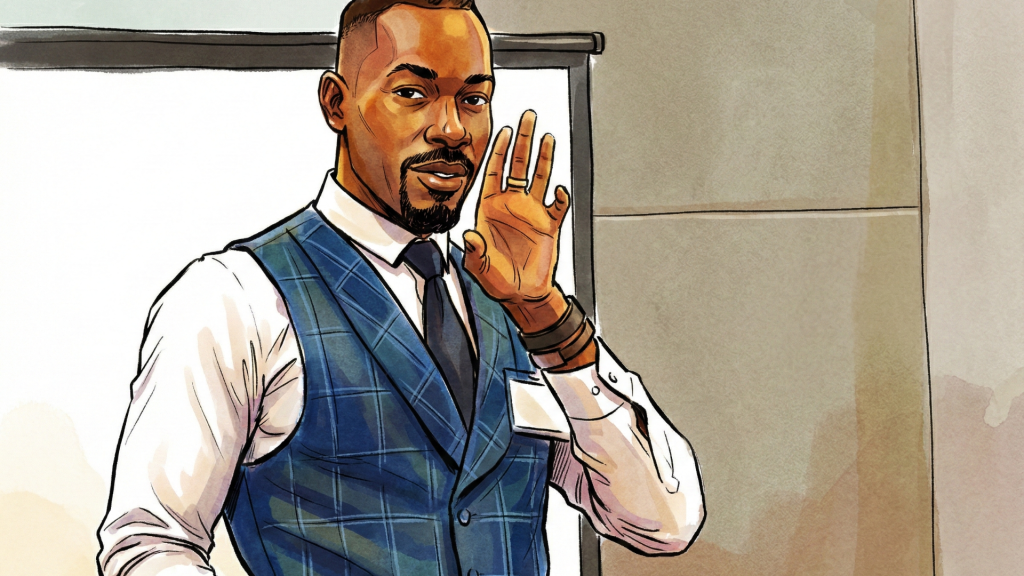
Arthur J. Rutledge and the quiet gravity of the vertical man.
The lighting at The Consulate Midtown is designed to flatter, but it also serves a secondary, unintended purpose: it reveals who is performing. The wrought-iron staircase and the gilded mirrors create a stage where motion is amplified, and for the uninitiated, the natural instinct is to fill that stage with noise.
People arrive in bursts of kinetic energy—shaking off the rain, checking coats, scanning the room for the person who might validate their evening.
Arthur J. Rutledge is already seated.
He occupies a booth halfway back, possessing the specific gravity of a man who is accustomed to waiting for the room to settle. He is drinking something dark, likely coffee, at an hour when most of Midtown has switched to gin.
It is a Spartan Tuesday, the weekly ritual that serves as the heartbeat of this particular ecosystem, and Arthur sits within it as a distinct anchor point.
He is not merely a member; he is a narrator in a room full of characters.
Arthur is an author and public speaker, though you wouldn’t know it from a badge or a banner. You know it by the way he listens.
While others are waiting for their turn to speak, rehearsing their opening lines, Arthur listens with the terrifying intensity of a writer deciding what to keep and what to edit out.
A younger man, fresh from a frantic day of “horizontal” networking—trading cards, exchanging emails, adding skills to a LinkedIn stack—approaches the table.
He recognizes Arthur, perhaps from a stage or a byline, and the recognition makes him nervous.
He leans in, voice pitched slightly too high for the acoustic velvet of the room, and launches into a monologue about scaling, acquisition costs, and the breathless speed of his ascent.
Arthur does not interrupt.
He sits with the stillness of someone who has spent years on stages, understanding that silence is often the loudest thing in the room. He practices a kind of active stillness that is rare in New York City.
When the young man finally pauses for air, Arthur does not offer a platitude.
He offers a revision.
He speaks with the edited precision of a man who has already committed his best thoughts to print.
Arthur asks a single question, and it isn’t about revenue or tech stacks. It is about the architecture of the young man’s ambition. He asks about the difference between building a wider foundation and building a higher peak.
The young man blinks, the momentum of his pitch arrested. He has been thinking about expansion; Arthur is talking about verticality.
This is the Rutledge signature.
In a business culture obsessed with the what—what you do, what you earn, what you drive—he is quietly obsessed with the how and the who. His work with the Vertical Mindset Group suggests that the ceiling of any venture is always, inevitably, the psychology of its leader.
But he doesn’t lecture the table.
He doesn’t turn the booth into a podium.
He simply embodies the text.
He sits with the posture of a man who has already done the heavy lifting of self-governance.
Briefly, he glances at his phone. He isn’t doom-scrolling or checking likes on a recent talk. He is checking the dashboard of a digital architecture he has built—a system that runs quietly in the background, managing the logistics of his reach so he doesn’t have to.
It is a quick check, clinical and precise, like an engineer tapping a gauge, before he slides the phone face down again. The system works so that he can be here, fully present, watching the narrative of the room unfold.
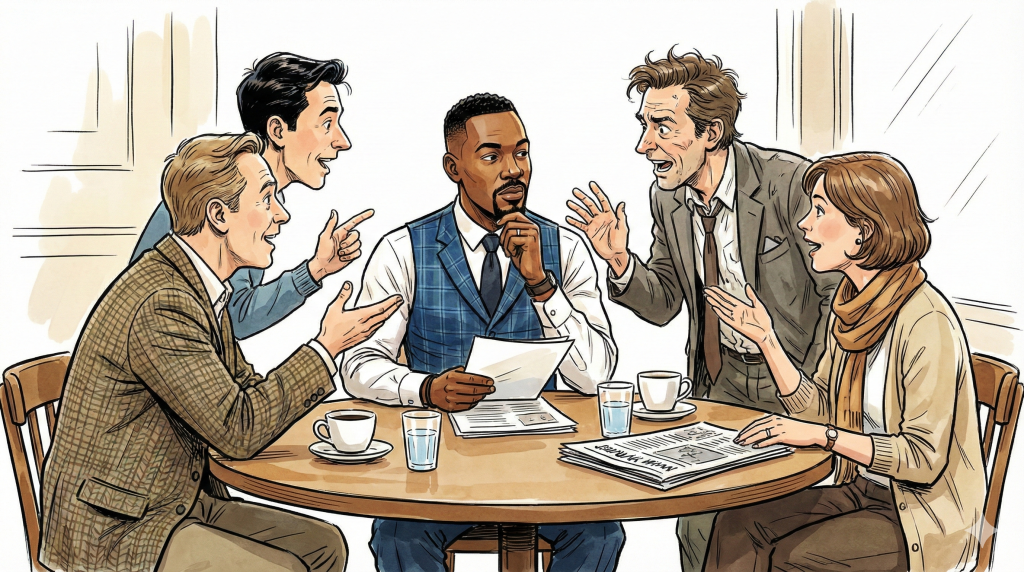
Around him, the Spartan Café members circulate.
There is the clink of glassware, the murmur of deal flow, the subtle choreography of introductions. Arthur watches it all with a benevolent, knowing detachment. He knows that half the people here are drafting a rough copy of who they want to be, and the other half are trying to publish it before it’s ready.
He offers neither validation nor critique. Instead, he offers a kind of editorial presence. To speak with him is to realize that your story might need a better editor.
Later, as the evening thins out and the waiters begin to clear the empty glasses, Arthur is still there. He is speaking now to a small circle of members who have stopped pitching and started leaning in.
The conversation has shifted from transactions to transformation.
He is speaking softly, his voice calibrated for the intimacy of the booth rather than the breadth of an auditorium, yet the effect is the same.
The listeners are leaning in, drawn by the gravity of a man who speaks in complete paragraphs.
He finishes his coffee.
The bill has been taken care of long ago, quietly, without ceremony.
He stands up, buttons his jacket, and moves toward the door. He does not rush. The Spartan Tuesday will happen again next week, and the week after.
The ecosystem is self-sustaining now. He steps out onto 56th Street, a vertical man in a horizontal world, walking with the steady pace of someone who knows exactly how the chapter ends.


@arthur-j-rutledge
Hey @daniel-juerakhan check it out!!!!
Spectacular????✨
Great article!!!!