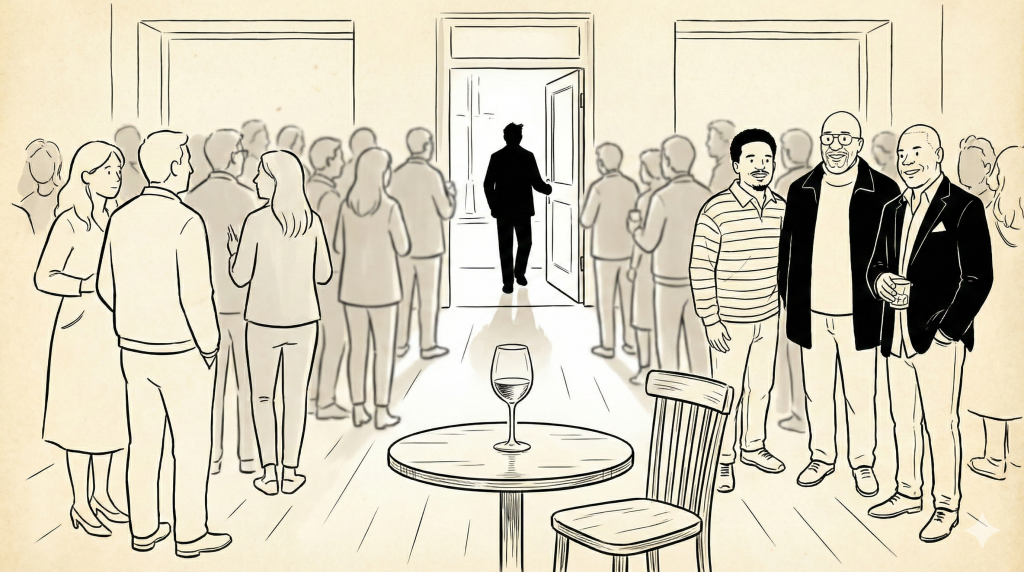
The Spartan Drift at Kellari Taverna

|
Getting your Trinity Audio player ready...
|
At Kellari Taverna, the architecture of ambition is built on white linen and Greek salt.
The condensation on a glass of Assyrtiko is, perhaps, the most honest clock in Midtown. At Kellari Taverna, before the first hands are shaken, the room exists in a state of expectant stillness.
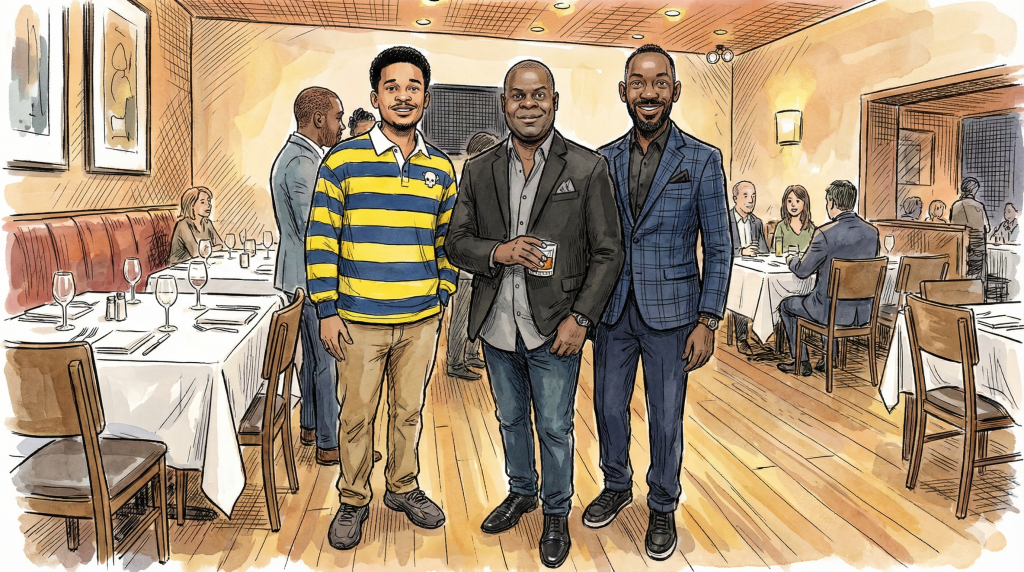
The light is warm, amber-toned, and filtered through high ceilings and heavy wooden beams that seem designed to absorb the sharper edges of a business day.
It is a room with a temperament of deep-seated hospitality, one that doesn’t demand your attention so much as it waits for you to realize you’ve already given it.
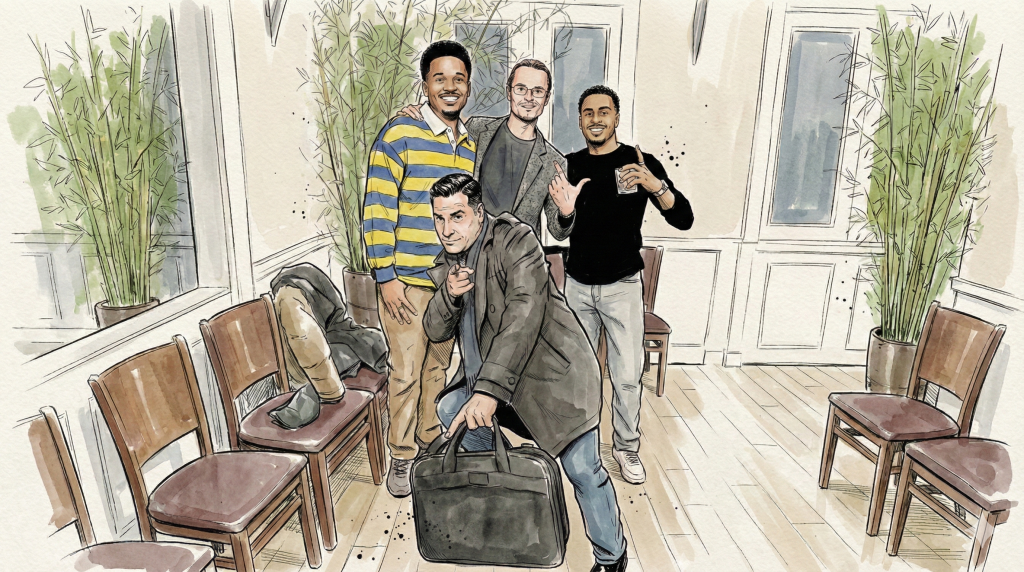
There is a specific choreography to how a Spartan Tuesday begins. It is not an arrival so much as a gradual infiltration.
One does not see a “networking event” form; instead, one notices the way the negative space between tables begins to tighten. A chair is pulled in—always with a certain practiced ease—and suddenly, a corner of the room that was merely a place to sit becomes a site of consequence.
Kellari Taverna, with its Mediterranean bones and New York pulse, serves as a character that rewards the patient. The staff move with the quiet efficiency of people who understand that in this room, the most important things are often said in the lowest volumes.
There is no urgency here.
The Spartan Café ethos has always been less about the loud declaration and more about the quiet proximity to access. On Tuesdays, that access is mediated by the smell of grilled octopus and the clink of silverware that feels heavy enough to anchor a conversation.
The Pacing of the Room
Observe the way a newcomer enters. There is a moment of calibration at the door—a brief, nearly imperceptible pause where they read the room’s temperature.
They are looking for the center of gravity.
At a Spartan Tuesday, that center is rarely fixed. It drifts from the bar to the long tables, fueled by the realization that everyone here is operating under the same unwritten set of rules.
Status, in this ecosystem, is revealed through posture.
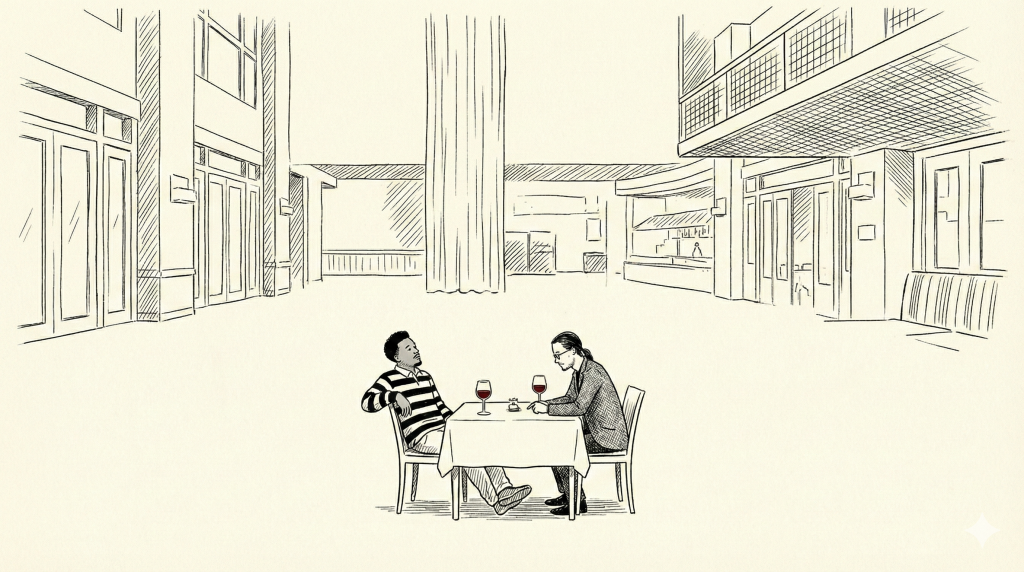
There is the leaning-in of the seeker and the leaning-back of the established. Between them lies the table—a white-clothed neutral zone where capital and culture negotiate their next moves.
You see it in the way a phone is placed face-down on the linen: an act of deliberate presence.
The conversation is rarely about the “what.” It is almost always about the “who” and the “how.” You might hear the phrase “we’re looking at the fourth quarter” or “he’s finally moving on the Greek project,” but these are just the surface ripples.
The real work is being done in the silences—the nods of recognition, the way a person’s eyes track someone entering the room without their head ever turning. It is a social literacy that is learned, not taught.
The Hybrid Horizon
What makes this gathering different from the generic Midtown happy hour is the sense of continuity.
This is the world’s first hybrid social media and private members club, yet in the room, the “media” part feels pleasantly distant.
The digital side of Spartan Café is the scaffolding; Tuesday at Kellari is the cathedral. The technology exists to ensure that when you finally sit across from someone, the awkwardness of the introduction has already been handled by the system. You are not meeting a stranger; you are resuming a thread that began elsewhere.
As the evening matures, the room’s temperament shifts from professional to personal. The lighting seems to dim by a fraction, or perhaps the collective mood simply settles. The seating hierarchy, once rigid, becomes fluid.
People stand, they migrate, they close circles.
A waiter replaces a bottle of sparkling water with the invisible grace of a stagehand.
There is a particular kind of laugh that happens at these tables—dry, knowing, and entirely devoid of the desperation found in less curated rooms. It is the sound of people who know that the room is working for them. They are not chasing the moment; they are the moment.
The Lingering Note
By the time the last plates are cleared, the “event” has long since ceased to be an event and has become a memory in formation.
The success of a Spartan Tuesday isn’t measured in business cards exchanged—an act that feels increasingly gauche in such a setting—but in the plans that are implied for Wednesday morning.
Walking out onto 44th Street, the city feels louder, faster, and significantly less organized than the room you just left. You carry a bit of Kellari’s amber glow with you, a sense of having been part of a closed circuit. The Tuesday drift is over, but the momentum is just beginning to settle into the bones of the week.